Now accepting enquiries for upcoming Shreevan Wellness retreats.

Yogic Discipline & Conscious Living - Shreevan Wellness Rishikesh

Spiritual Sadhana Retreat in Rishikesh

Grounded Daily Practice, Yogic Study and Mindful Living

Spiritual sadhana at Shreevan Wellness is a steady daily practice path. This spiritual sadhana retreat in Rishikesh may include meditation, breath awareness, mantra, silence, yogic study, reflection and mindful action. The focus is not performance or pressure. The focus is a rhythm you can understand, practice and carry into daily life.

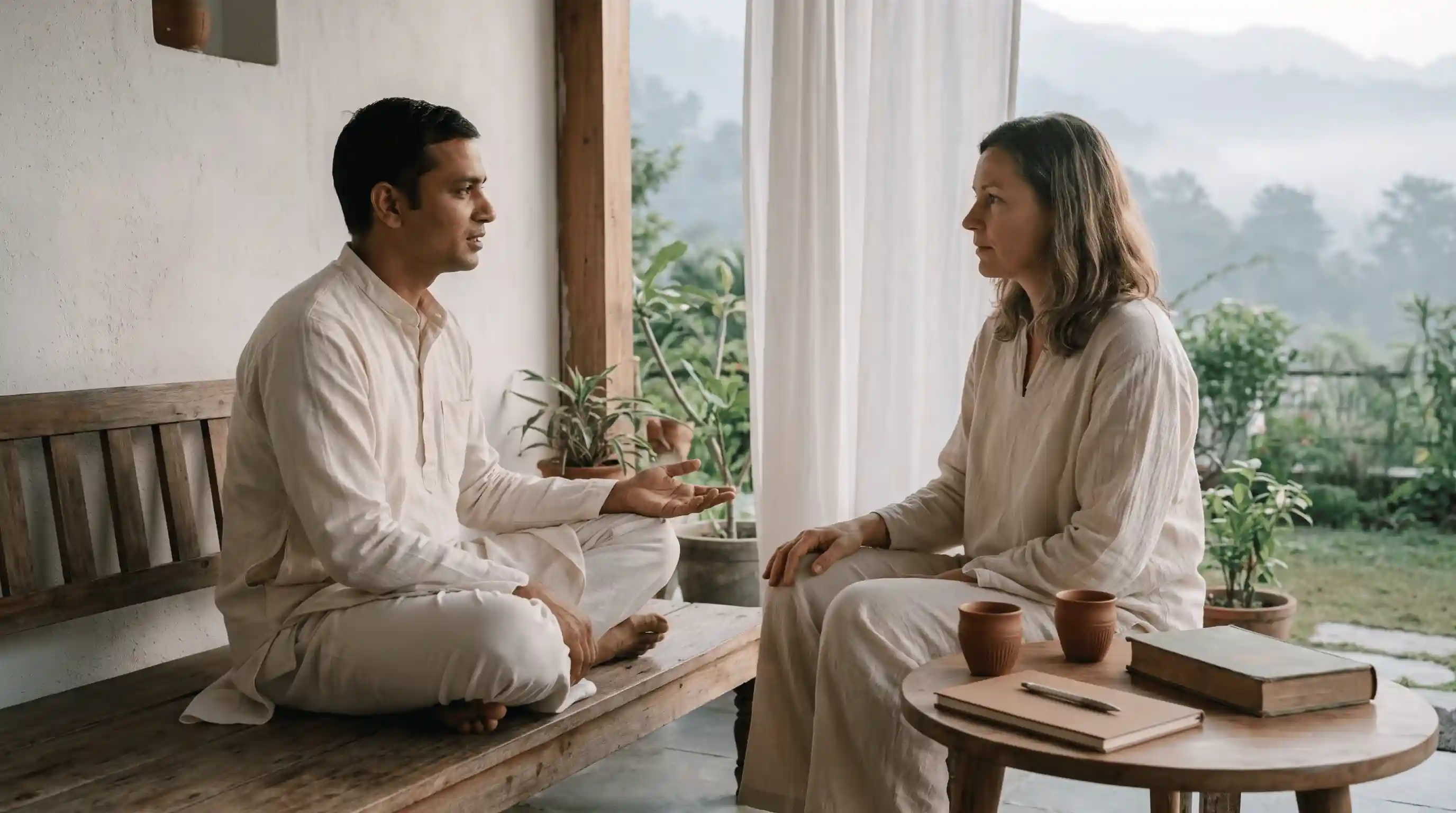
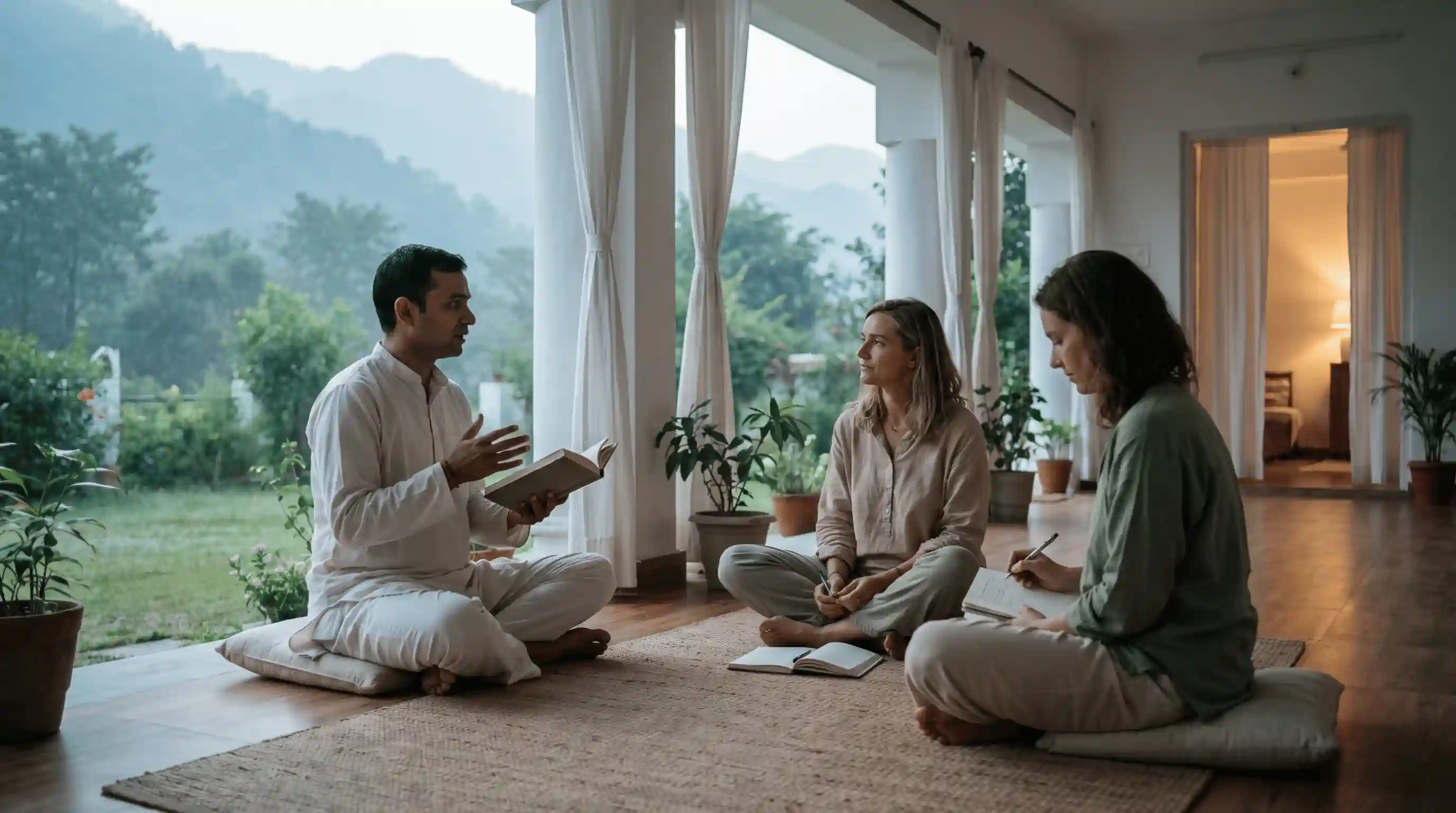
Spiritual sadhana retreat in Rishikesh with guided yogic study at Shreevan Wellness
A grounded spiritual retreat setting for study, reflection and daily practice.

Quick answer

In simple terms

Spiritual sadhana means steady practice. In a retreat, it means returning to meditation, silence, study, reflection and mindful action each day so insight becomes part of ordinary life.

Best for
  • Guests who want spiritual depth without pressure.
  • People looking for a grounded spiritual retreat in Rishikesh.
  • Longer-stay guests who want rhythm, reflection and integration.
What to expect
  • Morning quiet, breath practice, meditation or mantra.
  • Simple yogic philosophy and guided reflection.
  • Journaling, mindful meals and integration conversations.
  • A practice rhythm that changes by program duration.
What it is not
  • Not a promise of enlightenment.
  • Not forced belief, conversion or guru pressure.
  • Not an escape from family, health or work responsibilities.
  • Not a replacement for clinical or crisis support.
Program fit

The practice is applied differently by duration. Short programs use it gently; longer programs allow more repetition and integration.

Compare programs
01

What spiritual sadhana means

Spiritual sadhana is disciplined practice. In a retreat context, it means returning to a rhythm that can include meditation, breath awareness, mantra, silence, yogic study, reflection, service, ethical inquiry and conscious daily choices.

For Shreevan, spiritual sadhana gives the retreat a deeper spine. Without practice, a retreat can become a collection of pleasant sessions. With practice, the day begins to ask a stronger question: how will this change the way I live when I return home?

A spiritual sadhana retreat in Rishikesh should stay simple and honest. The emphasis is steady repetition, humility and integration, not dramatic spiritual performance.

02

Why people explore a spiritual retreat

Many guests come to Rishikesh because they are not only tired. They are questioning direction, identity, success, grief, devotion, service or meaning. Spiritual sadhana offers a way to engage those questions through practice rather than endless analysis.

This does not mean every guest needs the same spiritual intensity. A founder may need humility and silence. A life-transition seeker may need steadier reflection. A long-term practitioner may need structure and accountability.

The best spiritual retreat in Rishikesh is not the most intense one for every person. The right retreat meets the person, respects readiness and avoids pressure.

03

Why Rishikesh matters for sadhana

People often ask why Rishikesh is sacred for spiritual practice. Rishikesh has a long association with yoga, meditation, ashram life, pilgrimage and the Ganga. This history gives the place a strong contemplative atmosphere.

At Shreevan, the setting supports practice, but the place is not used as a shortcut. A spiritual retreat in Rishikesh still needs clear guidance, daily rhythm, consent, boundaries and post-retreat integration.

The value of spiritual sadhanas in Rishikesh comes from how the place, practice and personal honesty work together.

04

How it works inside a retreat

Sadhana can appear in small daily rituals: morning silence, guided meditation, mantra, contemplation, journaling, mindful meals, service, evening reflection or philosophical discussion. The point is not how exotic the practice looks. The point is whether the guest can return to it with sincerity.

Longer programs allow practice to deepen because repetition reveals patterns. The first days may be about arrival. The middle may expose resistance. The later stage may ask what needs to change after the retreat.

This is where sadhna for spiritual growth becomes practical. It moves from an inspiring retreat idea into daily choices, boundaries and habits.

05

How Shreevan approaches it

Shreevan's approach is reverent without being coercive. Spiritual practice is offered with context, choice and respect. Guests should never feel pushed into belief, devotion, disclosure or practices that conflict with their conscience.

A responsible spiritual retreat also avoids spiritual bypassing. Practice should not be used to deny emotion, avoid repair, ignore health needs or pretend that ordinary responsibilities do not matter. The deeper the practice, the more grounded the integration should become.

This is why the suitability call matters. It helps match the spiritual retreat in Rishikesh to the guest's readiness, program duration and support needs.

06

What beginners should know

Beginners often imagine sadhana as something extreme. In reality, it can begin with a simple daily commitment: sit, breathe, read, reflect, serve, eat consciously or close the day with honesty.

You do not need to arrive as a spiritual expert. You do need openness, respect for the place and willingness to practice without turning the retreat into self-display. Silence and simplicity may be more transformative than adding more techniques.

If you are comparing programs, ask about rhythm, group size, inclusions and the spiritual retreat in Rishikesh price before you book. The right choice should feel clear, not rushed.

07

What to be careful about

Be careful with any retreat that uses spiritual hierarchy, fear, shame or dependency as a selling tool. A guest should be invited into practice, not pressured into obedience. Transparency around schedule, boundaries and facilitation matters.

Also be careful if you are using spiritual retreat as a way to avoid clinical support, family conversations, financial decisions or work boundaries. Sadhana should strengthen your capacity to meet life honestly. It should not become a refined escape.

Practice clarity

Grounded sadhana vs spiritual performance

The main difference is intention. Grounded spiritual sadhana builds a repeatable rhythm. Spiritual performance chases status, intensity or a special identity.

Use this comparison to understand how Shreevan keeps spiritual sadhana practical, respectful and easier to integrate after the retreat.

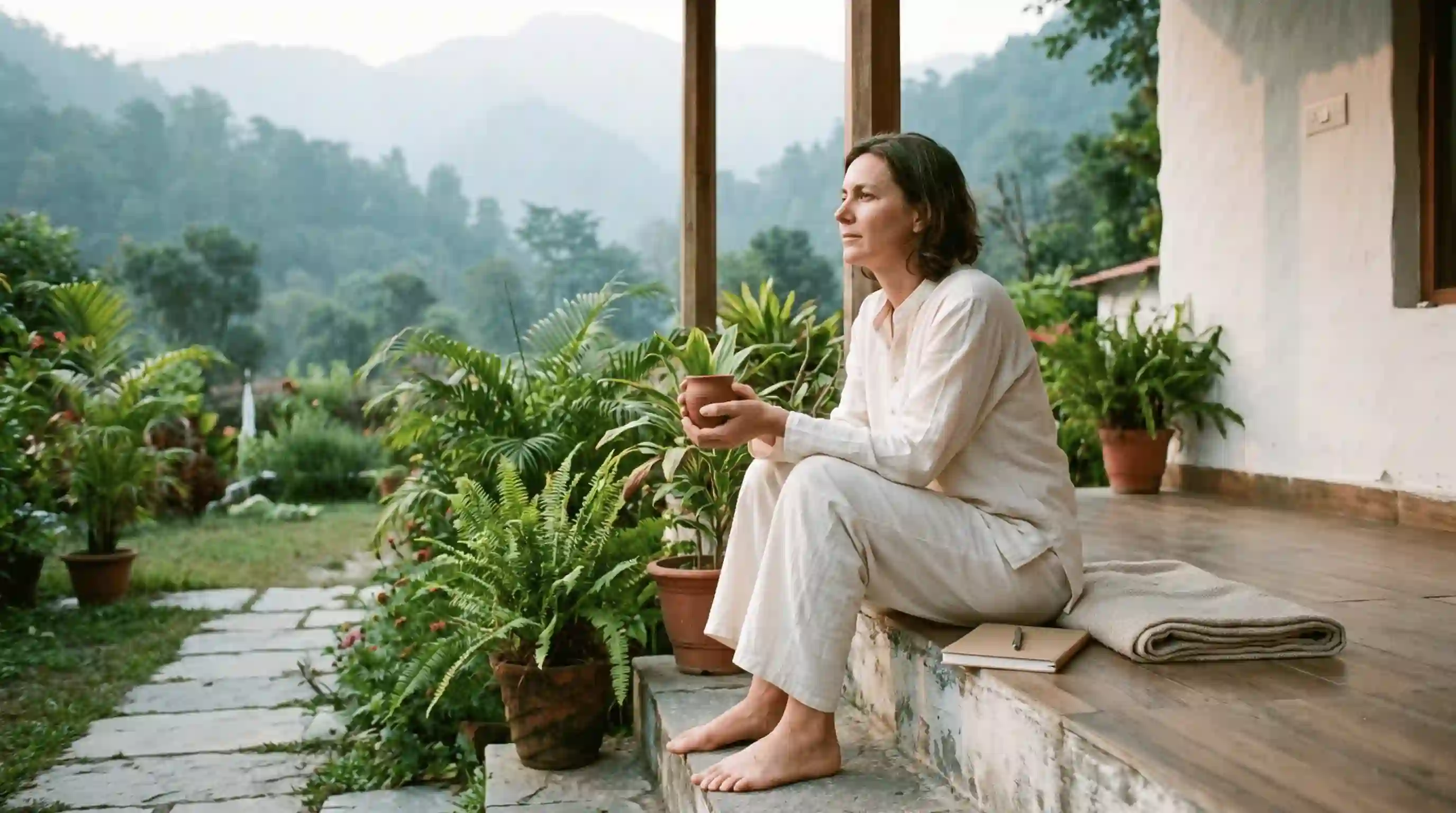
Yogic study and journaling setup for spiritual sadhana practice in Rishikesh
Simple tools for study, silence and reflection.
AspectGrounded spiritual sadhana at ShreevanWhat to avoid
IntentionDaily rhythm, reflection and integration.Chasing dramatic spiritual status.
BeliefRespectful, non-coercive and open to different backgrounds.Forced belief, conversion pressure or guru dependency.
PracticeMeditation, silence, study, mantra, journaling and mindful action.Random techniques without context.
PaceGradual repetition based on readiness.Sudden intensity or pressure to disclose.
OutcomeBetter self-awareness and daily-life clarity.Guaranteed awakening or escape from life.
SafetyClear boundaries and suitability conversation.Replacing medical or mental-health support.

Retreat experience

How this practice is held in the daily rhythm

A modality is not only a session. It has a before, during and after. The integration determines whether the practice becomes useful beyond the retreat.

Guest integrating spiritual sadhana practice during a Rishikesh retreat
Practice becomes useful when it returns to daily rhythm.
01

Before practice

Intention

Guests clarify why they are practicing and what kind of daily rhythm would be honest rather than performative.

02

During practice

Steady discipline

The spiritual sadhana retreat may include meditation, silence, mantra, study, reflection, seva or mindful daily routines based on suitability.

03

After practice

Integration

Journaling and conversation help translate insight into daily choices, boundaries and post-retreat commitments.

04

Daily rhythm

Return

The measure is not intensity. The measure is whether the guest can return to a clear practice after leaving.

Suitability

Who this may suit, and when to slow down

Suitability conversation for a spiritual sadhana retreat in Rishikesh
A calm suitability conversation helps choose the right rhythm, boundaries and level of support.

May suit you if

  • You want a spiritual retreat in Rishikesh with structure and humility.
  • You are ready to examine daily life, values and choices.
  • You prefer grounded practice over decorative wellness experiences.
  • You want sadhna for spiritual growth in a clear, non-coercive setting.

Be careful if

  • You are looking for guaranteed awakening or spiritual status.
  • You feel pressured by spiritual authority or group disclosure.
  • You want retreat practice to avoid needed professional or practical support.

Consult a professional if

  • You are in active crisis or severe distress.
  • You have a mental-health condition affected by intense spiritual practice or sleep changes.
  • You are unsure whether silence, fasting, mantra or deep introspection is suitable.
  • You are under psychiatric care or changing medication.

Connection map

Where to go next

Related pages keep the learning path clear: modality pages explain method, and program pages explain the duration-based retreat container.

What is spiritual sadhana?

Sadhana means steady spiritual practice. It can include meditation, mantra, silence, study, reflection, service and conscious daily routine. At Shreevan, it is framed as discipline and integration, not spiritual performance. The practice asks how insight becomes part of ordinary life after the retreat, not only how meaningful the retreat feels while you are there.

What is a spiritual sadhana retreat in Rishikesh?

A spiritual sadhana retreat in Rishikesh is a structured retreat where daily practice is central. At Shreevan, it may include meditation, breath awareness, mantra, silence, yogic study, journaling, mindful meals and reflection. The goal is not spiritual performance. The goal is a grounded rhythm that supports daily-life integration.

Do I need to follow a specific religion?

No. Shreevan is rooted in Indian yogic and spiritual context, but the practice should not be coercive or conversion-focused. Guests can participate respectfully without being forced into belief. Some practices may use traditional language or ritual, so the suitability conversation is a good place to clarify comfort, boundaries and expectations.

Why is Rishikesh considered sacred for spiritual practice?

Rishikesh is associated with yoga, meditation, ashram life, pilgrimage and the Ganga. Many guests choose a spiritual retreat in Rishikesh because the place supports quiet practice and reflection. The setting can help, but it is not a shortcut. A responsible retreat still needs clear rhythm, consent, boundaries and integration.

Is sadhana only for advanced practitioners?

No. Sadhana can begin simply. A beginner may start with short meditation, mindful meals, journaling, silence or a daily reflection. Advanced practice is not defined by complexity alone. It is defined by steadiness, humility and integration. Longer programs can hold more repetition, but even a short reset can introduce the principle of daily return.

What is the spiritual retreat in Rishikesh price?

The spiritual retreat in Rishikesh price depends on the program duration, stay, food and inclusions. At Shreevan, sadhana is usually part of a wider retreat rhythm rather than a standalone instant-fix session. Check the program page or book a suitability call for current pricing and the right duration.

Can spiritual practice replace therapy or medical care?

No. Spiritual practice can be meaningful, but it should not replace medical care, mental-health support, medication or emergency help. If you are in active distress, under clinical care or navigating significant symptoms, speak with a qualified professional before choosing a deep retreat. Shreevan's role is wellness and spiritual education, not clinical treatment.

What makes Shreevan's sadhana approach responsible?

A responsible approach uses clear context, consent and grounded integration. Guests should understand what practices are being offered and why. They should not be pressured into disclosure, belief or intensity. The work should connect back to ordinary life: sleep, food, relationships, choices, service, boundaries and how practice continues after departure.

Which program is best for spiritual sadhana?

The right program depends on readiness. The 3-day reset can introduce a simple rhythm. The 7-day foundation builds continuity. The 14-day and 28-day programs allow deeper reflection. The 60-day residency is the most serious container for lifestyle integration. Choose the level that you can enter honestly, not the one that sounds most impressive.

Calm next step

Practice should deepen your life, not separate you from it.

If you are considering a spiritually deeper program, use the suitability call to choose the right rhythm, boundaries and level of support.